
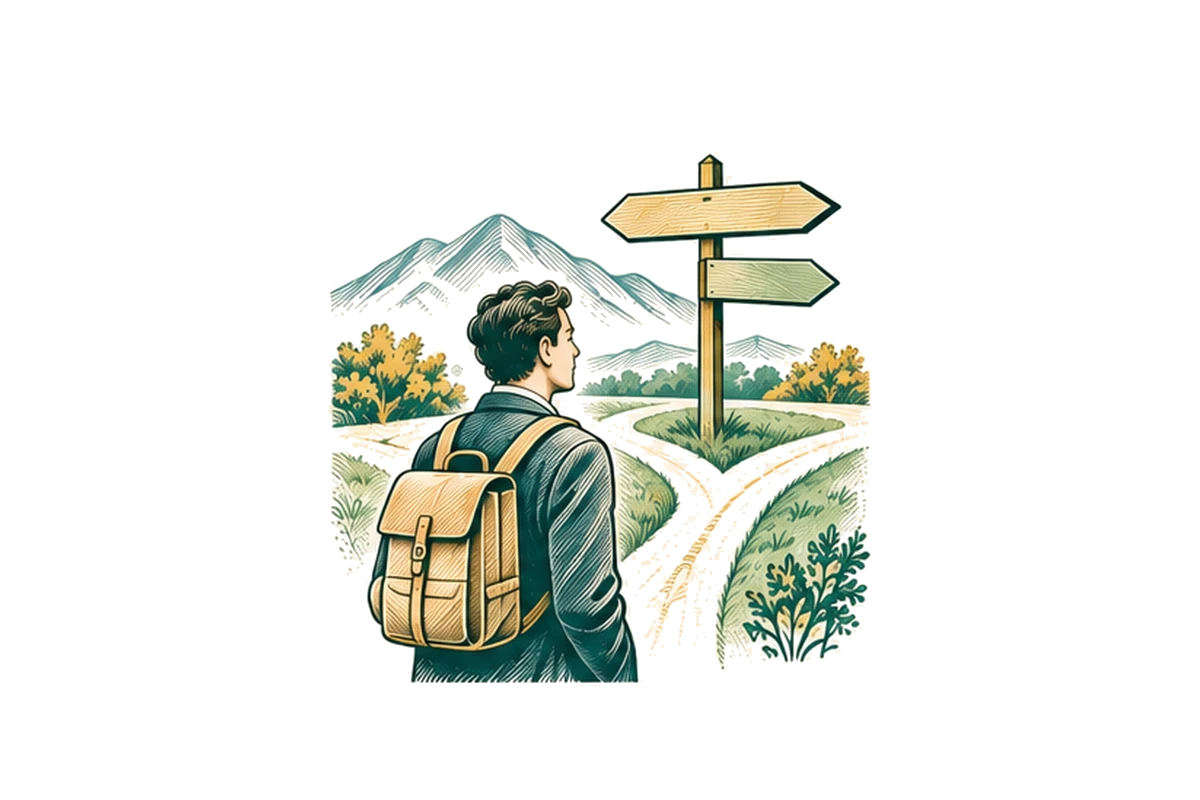
Risk is often associated with action. Investing. Changing jobs. Starting a business. Making a difficult decision. But some of the most important risks we take come from doing exactly the opposite: nothing.
Choosing not to act can feel safe because it preserves the status quo. Yet in a changing environment, standing still is rarely neutral. Inflation continues. Markets move. Industries evolve. Skills become outdated. Opportunities disappear.
Inaction is still a decision — and it has consequences.
The illusion of the “safe” choice
Imagine someone who keeps all their long-term savings in cash because investing feels risky. The money appears safe. The balance does not fluctuate with the stock market. But another risk is quietly growing: loss of purchasing power.
- If prices rise over time while the money earns little or nothing, the real value of those savings declines.
- Avoiding market risk has not eliminated risk. It has simply exchanged one type of risk for another. This happens far beyond investing.
- Staying in a job may avoid the uncertainty of changing companies, but it can create the risk of professional stagnation.
- Delaying an important decision may avoid discomfort today while reducing the options available tomorrow.
- Refusing to change a business model may protect short-term stability while competitors adapt to a new environment.
The apparent absence of action can hide very real exposure.
Every decision involves a trade-off
Good risk thinking begins with a simple question: What am I risking by choosing this option? But there is a second question that is just as important: What am I risking by not choosing it?
Looking at both sides changes the conversation. Instead of asking only: “What could go wrong if I act?” we can also ask: “What could go wrong if I don’t?”
That does not mean action is always better. Sometimes waiting is exactly the right decision. The difference is whether waiting is a deliberate choice based on the risks and opportunities involved — or simply the default because doing nothing feels more comfortable.
Risk is not the same as danger
One of the most useful distinctions in decision-making is between risk and danger. Danger suggests something we should avoid. Risk is broader. It describes uncertainty around an outcome.
And uncertainty can produce losses — but also opportunities.
A career move might fail, but it might also accelerate professional growth. An investment may decline, but avoiding investment altogether may make a long-term financial objective harder to reach. A company entering a new market may lose money, while refusing to evolve may eventually become a greater threat.
The objective is therefore not to eliminate risk. It is to understand which risks we are taking, which risks we are avoiding, and what we receive in exchange.
A simple framework for better decisions
When facing an important decision, consider four questions:
1. What happens if I act?
Identify both the potential downside and the potential opportunity.
2. What happens if I do nothing?
Consider not only today’s situation, but what may change over time.
3. Which risks can I manage?
Some uncertainty can be reduced through diversification, preparation, information or smaller incremental decisions.
4. Which option keeps more possibilities open?
Flexibility itself has value, particularly when the future is uncertain.
These questions will not eliminate uncertainty. They do something more useful: they make the trade-offs visible.
Sometimes the biggest risk is the one we don’t see
We naturally notice the risks associated with change because they are immediate and visible. The risks of staying where we are tend to develop slowly, which makes them easier to ignore.
But good risk thinking requires looking in both directions — at the consequences of moving forward and at the consequences of standing still.
Because sometimes the question is not: “Is this risky?”
Almost every meaningful decision is.
The better question is: “Compared with what?”
Free resource: Put these ideas into practice with our Risk & Opportunity Assessment (free PDF) — a printable worksheet to evaluate a decision, challenge assumptions and consider the cost of doing nothing.
A question to consider
What decision have you been postponing because waiting feels safer?
Leer este artículo en español →
The Risk Perspective
Beyond Risk, Towards Opportunity